If you’ve ever watched your child want to join a game, answer a classmate, or handle a change in plans—but not quite know how—you already understand the heart of social learning in autism. Families often ask if newer tools like virtual reality social skills training autism programs can help children practice social interaction in a way that feels safer, more predictable, and repeatable.
At Social Behavior Education Center (SBEC), we take an evidence-based, practical approach: use what works, measure progress, and make sure skills transfer to home, school, and community life—especially for families here in Orange County, California.
Why “virtual reality” can help social learning in autism
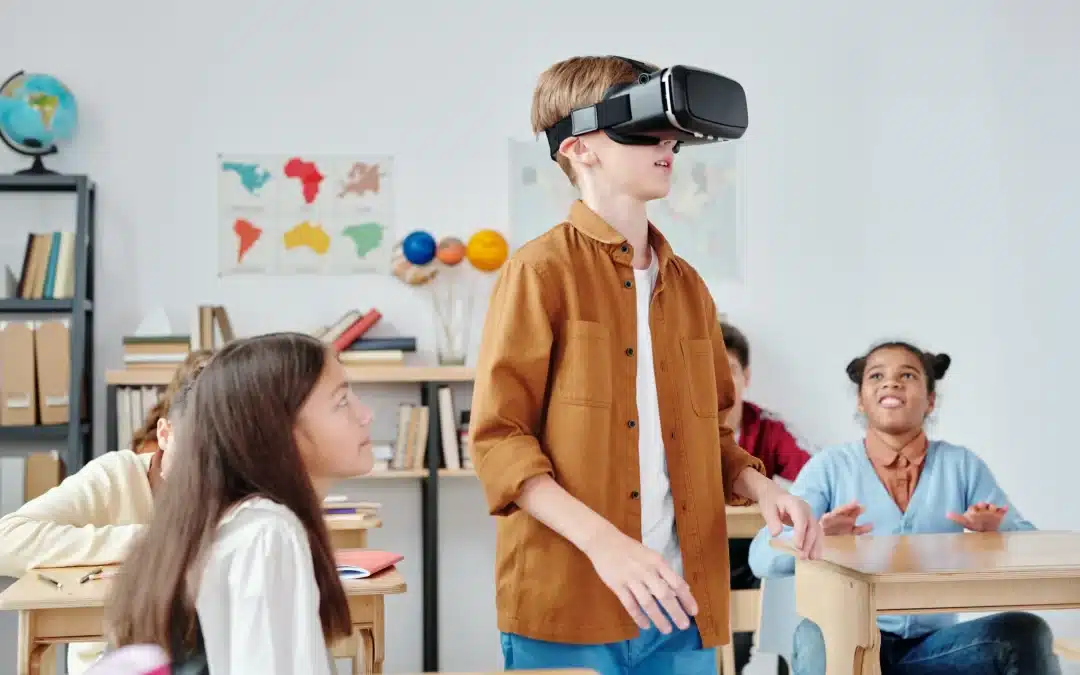
Virtual reality (VR) can create controlled social scenes—like greeting someone, taking turns, or handling “no”—without the chaos of real life. For some children, that lowers anxiety and increases willingness to practice. A 2025 systematic review found VR interventions can positively impact social skills in children and adolescents with autism, with immersive VR showing promise for more complex social skills (especially for youth with stronger verbal/cognitive profiles).
That doesn’t mean VR is magic. It means VR can be a structured practice space—and structure is often where children with autism learn best.
What social skills training still needs (even with VR)
VR is a tool—not a replacement for clinical support. Skill growth tends to happen faster when VR practice is paired with:
1) Clear goals that matter in daily life
Instead of “be more social,” we target observable skills like:
- initiating a greeting
- requesting a break
- answering a peer question
- joining play for 2–3 minutes
- coping with “not now” or “wait”
2) A behavior plan that supports communication and regulation
Social success depends on emotional regulation, attention, and functional communication. The CDC also notes social skills groups can provide structured opportunities to practice social skills for people with ASD.
3) Generalization (the big missing piece)
Children must practice the same skills outside the headset: at home, in school, on the playground, and in the community. That’s where ABA strategies, caregiver coaching, and school collaboration matter most.
How SBEC uses evidence-based support around VR practice
SBEC specializes in behavior-focused services for neurodiverse individuals—building meaningful, functional skills through consistent intervention and data-driven progress. Whether VR is used or not, our foundation stays the same: personalized care, measurable goals, and compassionate support.
ABA therapy: the engine behind lasting change
ABA therapy focuses on understanding why behaviors occur and teaching new, functional skills. At SBEC, plans are designed and overseen by qualified clinicians (including BCBAs/QBAs) and implemented with careful progress monitoring.
Social skills groups: where practice becomes real
VR may help your child rehearse skills, but social skills groups help them apply those skills with peers in a supportive environment—turn-taking, conversation flow, perspective-taking, and friendship behaviors.
School-based services: consistency across settings
If a child is practicing social interaction skills, it’s powerful when families and schools use the same strategies. SBEC can collaborate with educators and support IEP-aligned goals so progress doesn’t “reset” every Monday.
What “good” VR social skills training looks like
Not all programs are equal. Strong virtual reality social skills training autism experiences usually include:
Realistic but flexible scenarios
Examples: joining a game, handling teasing, asking for help, responding to a teacher correction.
A coaching layer
An adult (clinician, therapist, or trained caregiver) pauses, prompts, and reinforces the skill. Practice without coaching can become “game performance” instead of real-life learning.
Data + feedback
We track what was practiced, how independent the child was, and how often they used the same skill later in natural settings.
Sensory and safety considerations
Some children are sensitive to headsets, visual motion, or sound. The plan should be individualized and consent-based—never forced.
Orange County families: getting started the right way
If you’re looking for autism support in Orange County, California, start with a plan that fits your child—not a one-size-fits-all program. That includes choosing between home-based, clinic-based, school-based, or telehealth services based on your child’s needs and your family’s routine.
In the middle of your decision-making, remember this: VR Social Skills Autism in Orange County works best when it’s integrated into a broader, evidence-based care plan—especially one that supports communication, emotional regulation, and daily functioning.
👉 Get a free consultation
Our team provides free initial consultations and culturally sensitive support, including services in Farsi for families who prefer care in their native language.
Insurance coverage: SBEC works with major plans including Anthem Blue Cross, Aetna, Magellan Health, Evernorth Behavioral Health/Cigna, and Blue Shield of California. If you’re not sure what your plan covers, we can help you understand your options during the consultation.
And yes—Iranians abroad can get free initial consultation as you explore resources, next steps, and practical strategies for supporting your child from wherever you live.
Common questions parents ask about VR for autism
Is VR evidence-based?
Research overall supports VR as a promising intervention tool for improving social skills in children and adolescents with autism, though outcomes vary by the child’s profile and how the program is implemented.
Will VR replace ABA or social skills groups?
Typically, no. Think of VR as “practice in a controlled space,” and ABA/social groups as “coaching and real-world application.”
What if my child is nonverbal or has limited language?
VR may still support basic social learning, but goals should be communication-forward (requesting, turn-taking, functional communication) and supported with evidence-based strategies and visuals. The intervention must match your child’s learning style.
How fast will we see results?
Progress depends on consistency, motivation, and generalization opportunities. The fastest gains usually happen when caregivers are trained and the same strategies are used across home and school.
Choosing the right next step for your family
If you’re curious about virtual reality social skills training autism, you don’t have to decide based on hype. You can decide based on fit: your child’s needs, your family’s culture and language, your schedule, and what will actually carry into daily life.
At SBEC in Orange County, California, we build care plans that prioritize real-world independence: communication, emotional growth, life skills, and meaningful connection—supported by compassionate experts and proven strategies.
👉 Get a free consultation
Our team provides free initial consultations and culturally sensitive support, including services in Farsi for families who prefer care in their native language. And Iranians abroad can get free initial consultation, too—because support should travel with your family.
📞 Call us at (949) 259-8786
📧 Email: Drtorabicounselling@gmail.com